Policy Briefs

The Institute for Research Analysis and Dialogue policy briefs deliver evidence-based insights and recomendations on critical issues affecting the state and the nation, supporting informed decision-making.

service logo

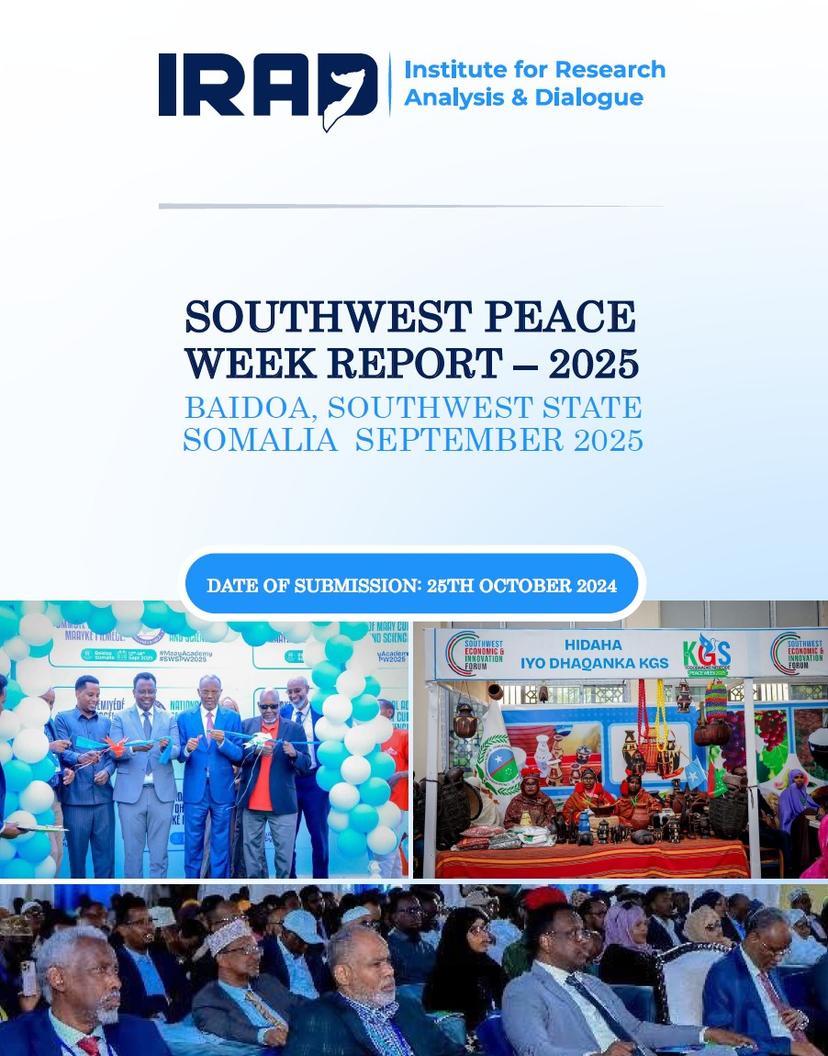
SOUTHWEST PEACEWEEK REPORT

Admin

November 13, 2025

The Institute for Research, Analysis & Dialogue (IRAD) played a key and transformative role in
the 2025 Southwest State Peace Week, held in Baidoa from 11–17 September 2025” Organized by
the Ministry of Interior, Local Governments, and Reconciliation (MOILGR), the Peace Week
brought together government institutions, civil society, international partners, the Somali
diaspora, academics, political leaders, and local communities in a week-long celebration and
reflection on peace, culture, and dialogue. The 2025 edition marked a major milestone for
Somalia’s ongoing reconciliation journey, with IRAD’s leadership in evidence-based dialogue,
policy analysis, and citizen engagement helping shape the week’s intellectual and policy
dimensions.

service logo

Baidoa Resource Sharing Agreement Report

Admin

November 10, 2025

The Institute for Research Analysis and Dialogue (IRAD), in collaboration with the Southwest
State Ministry of Petroleum and Minerals, hosted a high-level public dialogue in Baidoa as part of
Southwest Peace Week 2025. The event brought together government officials, civil society
representatives, academics, and community leaders to discuss Somalia’s 2018 Baidoa Resource
Sharing Agreement a milestone framework for the management, ownership, and equitable
distribution of petroleum and mineral revenues.

service logo

Aligning Cultural Identity with Economic Opportunities: Rethinking theNational Identity Narrative of the Southern Populace

Admin

October 20, 2025

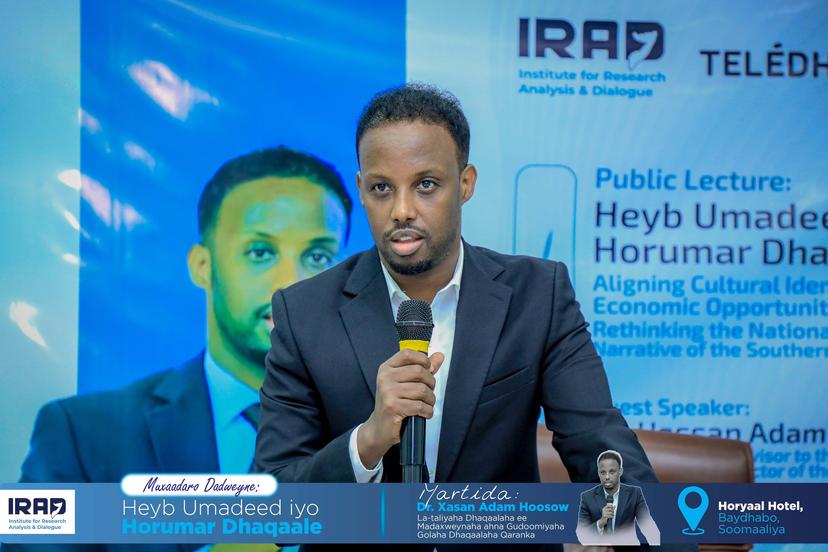
Dr. Hassan Hosow began by framing the discussion as a necessary and honest
conversation about Sub-Clan identity and its direct link to the grasp of economic
opportunities. Speaking with candor, he explained that Somalia’s economic
resource base—land, people, capital, and ideas—remains underutilized. The lack
of reliable data on land use, limited productivity, and absence of major industries
have left Somalia ranking near the bottom in global production output.

Download full report

service logo

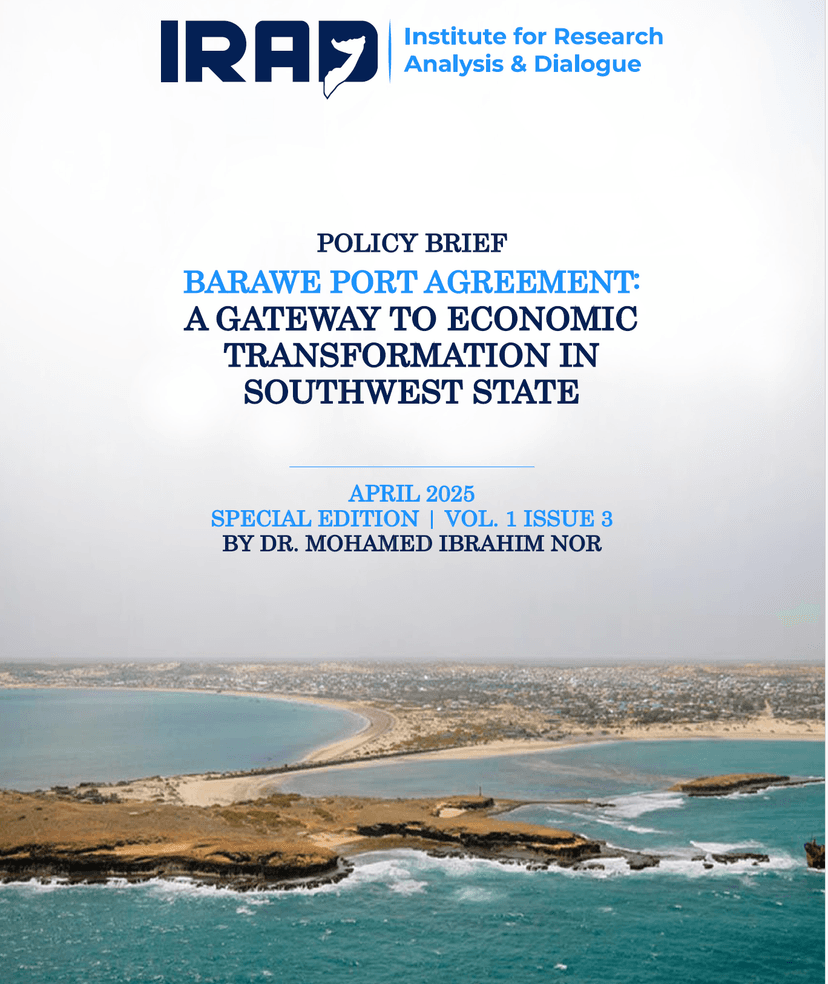
POLICY BRIEF BARAWE PORT AGREEMENT:A GATEWAY TO ECONOMICTRANSFORMATION INSOUTHWEST STATE

Admin

July 10, 2025

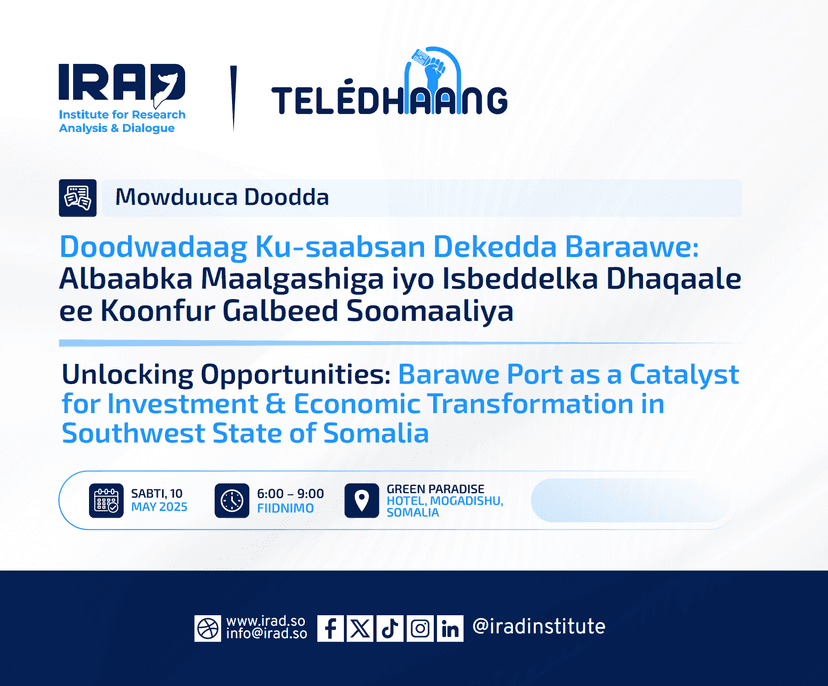
On May 10th, 2025, the IRAD Institute held a well-organized panel discussion in Mogadishu focused on promoting investment opportunities at Barawe port through policy discussions. The event was attended by respected public officials from both FGS and FMSs, who participated in a live discussion with a diverse group of audience members to analyze potential port investment opportunities.

This was preceded by research on the subject matter that was presented during the panel.

Following this, the Institute published a policy paper with clear recommendations for implementing policies, discussing the potential of Baraawe Port investments and related economic opportunities for the country and the region.

Please follow the link below to access the full, readable version of the report.

Download full report

service logo

A COMMENTARY ON THE FISCAL IMPACT OF USAID WITHDRAWAL ACTIVITIES IN THE SOUTHWEST STATE OF SOMALIA JUNE 2025

Admin

June 8, 2025

The new U.S. administration under President Donald Trump, following his second inauguration on January 20th, 2025, ushered in a major shift that led to global economic uncertainty, including trade and tariff war and freezing official development assistance through USAID. In this regard, USAID operations were abruptly halted on February 23rd, 2025. This decision had a substantial impact on many countries, including Somalia, with Southwest State especially affected by the loss of a key revenue source and the disruption of numerous ongoing projects previously supported by USAID.

Southwest is one of the states in Somalia hosting the largest number of activities funded through foreign aid. Many households in the state largely rely on employment and livelihoods from aid-funded activities. Similar to other parts of Somalia, hundreds of staff were laid off in the months between February and May by many organizations based in the Southwest region, while a large number of programs were paused.

A total of 11 International Organizations moved out of the region, with 7 INGOs reported completely closed operations by the month of April.

To gain an in-depth understanding of the fiscal impact, the IRAD Institute met with the Minister of Finance, H.E. Ahmed Mohamed Hassan, on April 29th to discuss the fiscal impact on the State following the abrupt disruptions of the USAID Programs in the State.

Please read the full brief from the link below

Download full report

service logo

IRAD Annual Report 2024

Admin

April 14, 2025

Halkan Waxaad Kala Dagi Kartaa Warbixin Sanadeedka Machadka Cilmi Baarista, falaqaynta iyo doodaha ee IRAD wuxuu halkan ku soo bandhigaya warbixinta sanadlaha ee machadka, 2024.

Si aad uga bogato warbixinta fadlan guji link hoose

service logo

Navigating Somalia National Security Dynamics: Perspectives From Southwest State

Admin

December 9, 2024

Security is fundamental to sustainable peace and development, serving as the foundation for progress in governance, reconciliation, justice, and service delivery. In alignment with our commitment to peacebuilding and our goal of delivering high-quality technical analysis on strategic domains such as security, IRAD partnered with Warteelka Arlaadi to host an X Space discussion on Somalia’s national security dynamics on September 14, 2024. This event convened senior security experts and analysts to explore critical topics, including federal security arrangements, the ATMIS drawdown, regional security challenges, and the trust deficit between federal and regional administrations.

The dialogue was informed by extensive preparatory work, including high-profile interviews, observations during the Somali Prime Minister’s visit to Baidoa, consultations with various sectors of Southwest State society, desk review data analysis, and comprehensive literature reviews. Building on these efforts, IRAD published this in-depth article analyzing Somalia’s national security dynamics through the lens of Southwest State. The publication aims to support evidence-based decision-making and advance the shared goal of fostering peace, unity, and stability in Somalia.

This research underscores the understanding that addressing security is not merely a technical challenge but a foundational step toward building a resilient and inclusive future for all Somalis.


Download the full paper here to explore more insights and analysis

service logo

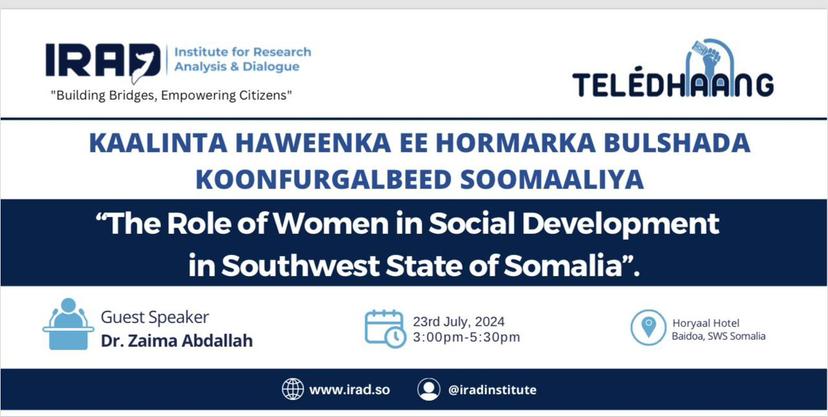
Forum Report on The Role of Women in Social Development in Southwest State of Somalia

Admin

November 20, 2024

The fourth Telédhaang forum of the Institute for Research Analysis and Dialogue (IRAD) was convened in Baidoa to discuss “The Role of Women in Social Development in the Southwest State of Somalia.” The event brought together over 40 women from diverse backgrounds, representing various women-led civil society organizations and the State Ministry of Women, Family Affairs and Human Rights Development. The primary objective of the forum was to explore the critical role women play in social development and to identify strategies to enhance their contributions.

The event featured a keynote address by Dr. Zaima Abdullahi, IRAD Institute board director and experienced development practitioner. In her opening remarks, she highlighted the distinct challenges faced by women in the Southwest State of Somalia and emphasized the importance of women’s empowerment and their indispensable role in achieving sustainable social development. She further underscored the institute’s commitment to fostering gender equality and women’s leadership.

service logo

Social Contract Think Session

Admin

November 17, 2024

Social Contract Think Session: Southwest State of Somalia Perspectives

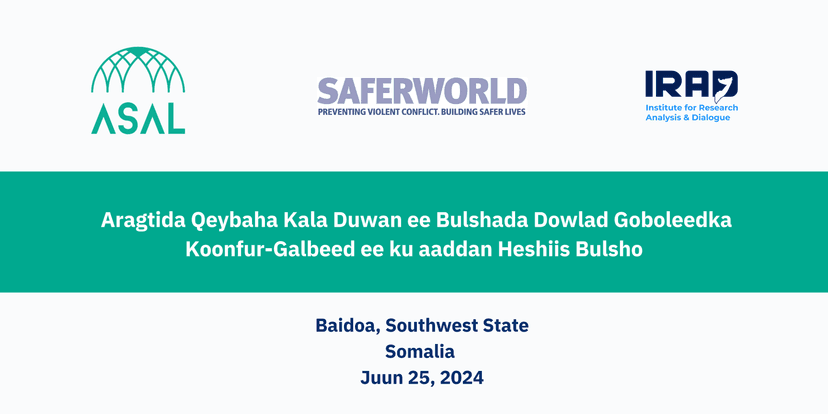
The Institute for Research Analysis and Dialogue (IRAD), in partnership with Asal and Saferworld, is pleased to host a collaborative symposium titled “Southwest State Perspectives on the Social Contract” on Tuesday, 25 June 2024, in Baidoa. 

This dynamic session brought together a wide range of participants, including regional parliamentarians, women, youth, persons with disabilities, traditional elders, religious leaders, marginalized communities, internally displaced persons (IDPs), academics, media representatives, and officials from the Southwest State Ministries of Justice, Security, and Constitutional Affairs. 

Discussions centered on uniquely Somali perspectives of social contracts and their relevance to contemporary debates on citizenship, political settlements, and state (re)building efforts. The social contract framework was explored as a critical lens for addressing challenges such as fostering inclusive development policies and ensuring equitable outcomes. 

This symposium forms part of the “Somali Perspectives on the Social Contract Series,” a dedicated initiative designed to encourage subnational and federal dialogues. The series serves as a platform for sharing diverse viewpoints and crafting strategies grounded in local realities, contributing to a more inclusive and effective discourse on governance and development in Somalia.

service logo

Strengthening Justice System and Finalization of the Provisional Constitution

Admin

November 17, 2024

Introduction & Context

The constitutional review process and justice system reform in Somalia are vital pillars of the country’s state-building and governance efforts. With the provisional constitution still under review, there is a pressing need to finalize it in a way that reflects the aspirations of all Somalis. Equally important is strengthening the justice system to ensure inclusive, transparent, and citizen-centric governance.

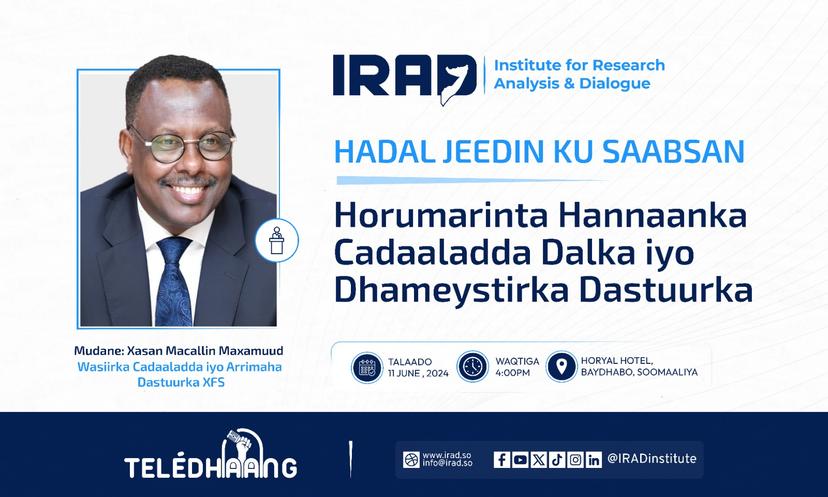
On June 11, 2024, the Institute for Research Analysis and Dialogue organized its fourth citizen forum, focusing on strengthening Somalia’s justice system and finalizing the provisional constitution. The event was attended by the Federal Government of Somalia’s Minister of Justice and Constitutional Affairs, alongside justice ministries from the Federal Member States, members of the judiciary, parliamentarians, and representatives from civil society, including women, youth, traditional elders, religiuos leader, and academia.

Minister Hassan Moallin, the FGS Minister of Justice, delivered opening remarks highlighting the government’s efforts in completing the provisional constitution, which is undergoing amendments. He also provided updates on initiatives to strengthen the justice system, emphasizing the need to stregthen judicial independence, amend the constitution, and ensure it aligns with both legal standards and religious principles. The Minister acknowledged the Institute for facilitating this opportunity to engage directly with citizens and gather input on the justice system and the ongoing constitutional review process, which significantly contributes to strengthening the social contract and building public trust. Participants were given the opportunity to ask the Minister questions, which he addressed in detail, fostering a productive and engaging dialogue.

service logo

Citizen Forum For Huddur Community and Local Administration

Admin

November 16, 2024

Introduction & Context

Huddur is the administrative capital of the Bakool region in Somalia’s Southwest State, located approximately 420 km southwest of Mogadishu and 130 km north of Baidoa. The district is composed of five urban villages—Buulow, Moorogaabey, Sheikh-aweys, Horseed, and Shiidla—each led by a village leader and committee members. The current district administration, consisting of 27 councilors, was elected in August 2022 as part of broader government efforts toward democratization and decentralization. For over a decade, Huddur has been under siege, severely restricting access to the city and internal movement, reducing the flow of food and goods to donkey carts and airlifted humanitarian aid.

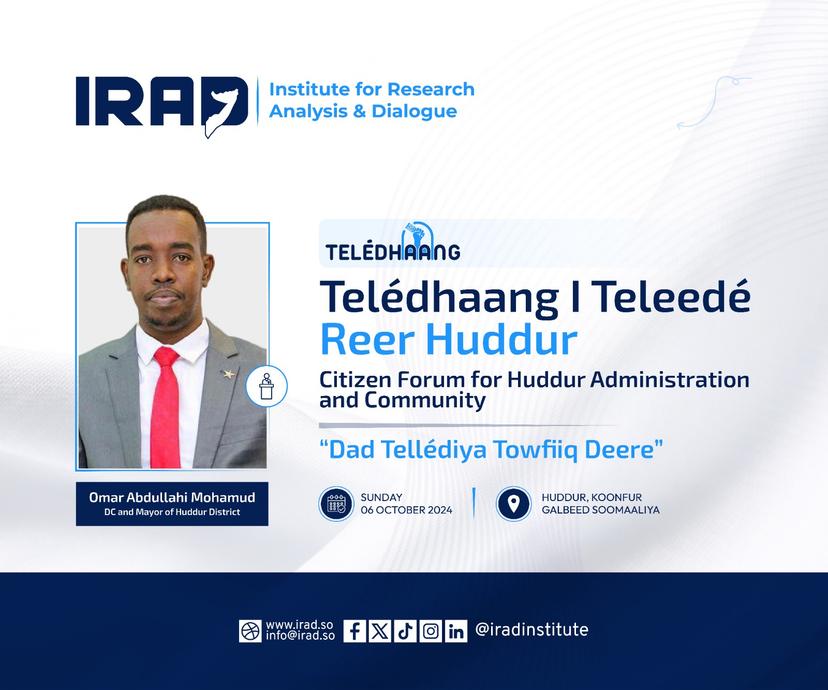
The Institute for Research, Analysis, and Dialogue (IRAD) held its fifth Teledhaang citizen forum in Huddur that facilitated open and frank dialogue between the Huddur community and local administration. Participants representing women, youth, traditional elders, religious leaders, health professionals, educators, civil society organizations, and the general public posed open and candid questions to the mayor. The event was also attended by officials from the Bakool regional administration, who delivered closing remarks, commending IRAD’s role in facilitating such an important forum.

Before the forum began, members of IRAD’s board of directors, including the deputy chair, delivered opening and introductory remarks, setting the stage for the discussion. The mayor also gave brief opening remarks, emphasizing the significance of citizen forums in holding local leaders accountable to their constituents. He further recognized IRAD’s pivotal role in organizing such forums and conducting research. In his address, Dr. Abbas, a member of IRAD’s board, outlined the institute’s mission to promote interdisciplinary research and inclusive dialogue, rooted in the history and heritage of the Southwest community. “IRAD is committed to sharing the narratives of the Southwest people,” he stated. “This forum provides a platform for residents to ask questions related to their community’s needs, while looking at the bigger picture of progress.” Dr. Abbas also highlighted Huddur’s unique history and culture, which are characterized by resilience and openness despite the multifaceted challenges, including conflict and environmental stressors. He concluded by expressing gratitude to the community for their warm welcome and participation, praising the strength and resilience of the people of Huddur in the face of decades-long hardships.

Additionally, Dr. Aden, the deputy chair of IRAD’s board, shared the institute’s successes since its establishment and underscored the significance of holding the first citizen forum outside Baidoa in Huddur. He emphasized the need for local leaders to seek community-driven advice and to focus on developments that align with social needs and priorities.
service logo

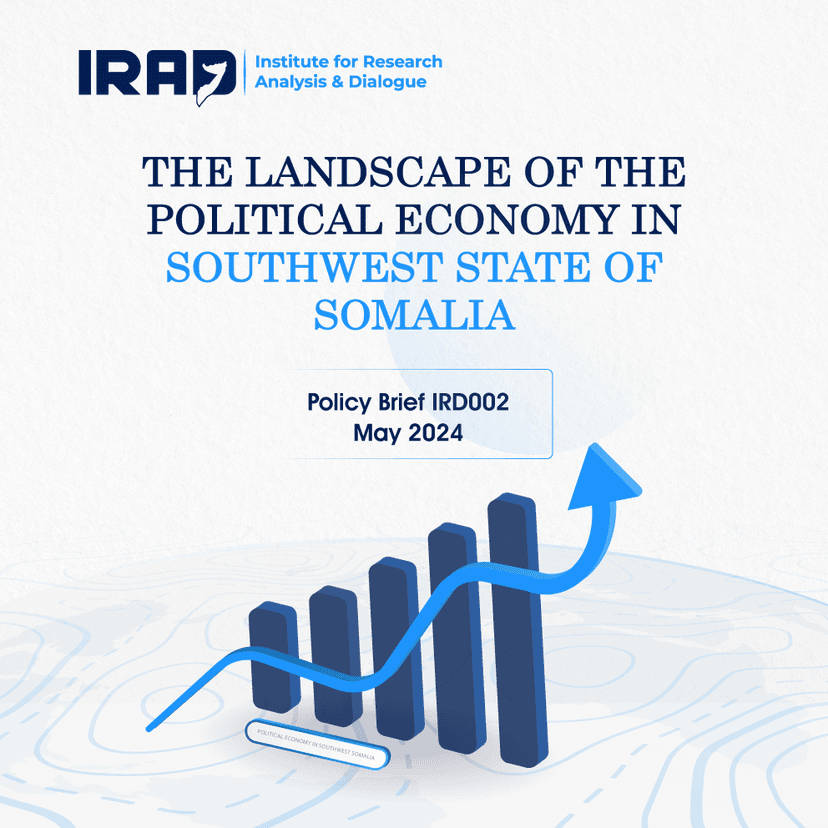
The Landscape of the Political Economy in Southwest State of Somalia

Admin

May 26, 2024

The economic landscape of the Southwest State is anchored in agriculture, benefiting from fertile lands and marine and natural resources. However, economic development is severely constrained by recurring droughts, security threats, and a lack of infrastructure. These factors not only impede agricultural productivity but also limit access to markets and discourage investment. Thus, the state’s economy remains largely informal, relying heavily on traditional farming practices, which while sustaining a large portion of the population, offers limited growth or innovation.

On the other hand, climate change significantly affects the Southwest State, with increased droughts and floods damaging agricultural productivity and exacerbating food security. This environmental instability not only heightens community tensions but also leads to resource-based conflicts, displacement, and economic instability. These challenges demand urgent attention to mitigate their impact on the state’s development and stability.

Socially, the state is deeply influenced by a complex clan-based structure, which affects governance and community interactions, often leading to interclan conflicts. The challenge is compounded by the presence of a large number of internally displaced persons (IDPs), which strains local resources and complicates social cohesion. Politically, the state is navigating a path towards democratic governance with international support, yet clan politics and insurgent activities by Al-Shabaab make the political environment particularly volatile.

To harness the state’s potential and address its myriad challenges, the policy paper recommends several strategic investments and comprehensive policy implementations. These include developing infrastructure, improving market access, promoting agricultural diversification, leveraging economic opportunities beyond agriculture, fostering job creation, enhancing social services, and increasing international cooperation. By focusing on these areas, Southwest State can promote stability and sustainable economic growth, contributing significantly to Somalia’s broader development goals.


Download the full policy brief here

service logo

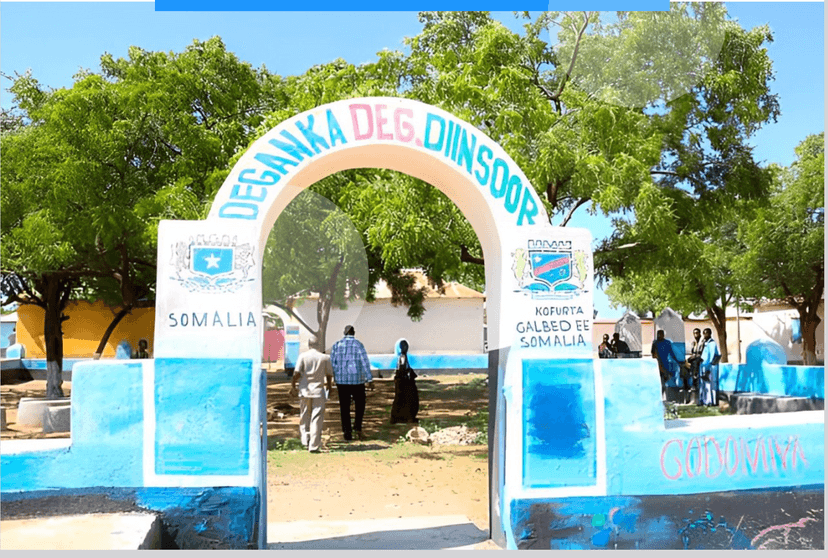
QALALAASAHA KU SOOCUSBOONAADAY DEGMADA DIINSOOR

Admin

May 5, 2024

Maamulka Koonfur Galbeed ee Soomaaliya ayaa sannadkii 2014-kii ka mid noqday shanta dowlad goboleed ee xubnaha ka ah Dawladda Federaalka ah ee Soomaaliya, kaddib markii la ansixiyay dastuurka KMG ah ee Federaalka sannadkii 2012, iyadoo caasimaddiisa rasmiga ah ay tahay Baraawe, balse uu maamulku si kumeel gaar ah ugu shaqeeyo magaalada Baydhawa. Tan iyo markii la unkay Dowlad Goboleedka Koonfur Galbeed ayaa waxaa ay wajahaysaa dhibaatooyin dhowr ah; oo caqabad ku ah xoojinta dowlad dhiska deegaanka. Dhibaatooyinkaan waxaa ka mid ah dhaqaale xumo, xasilooni dari joogto ah oo siyaasadeed, muranno la xiriira habraaca doorasho, dhibaatooyin guud ee amni xumo ee iyo kuwo kooxaha xagjirka ah ay abuureen. Intaa waxaa sii dheer dhibaatooyin hor leh oo ka dhashay diiramaadka dunnida oo keenay isbedel cimilo taas oo saamayn wayn ku haaya degaanno tiro badan oo Koonfur Galbeed ka tirsan.

Arrimahan waxay caqabad joogto ah ku noqdeen dadaallada xoojinta maamul dowladeed iyo daadajinta maamul wanaagga, xoojinta sugidda amniga, iyo sare-u-qaadidda bixinta adeegyada aasaasiga ah.

Falanqeyntan ayaa, sidaas darteed, lagu eegayaa waxyaabaha salka ku haya colaadaha kasoo cusboonaaday qeybo ka mid ah deegaanada maamulka balse waxaa diirada lagu saaraya degmada Diinsoor oo ah ubucda isku dhacyadii ugu danbeeyay. Natiijooyinka ka soo baxay falanqayntani, waxay u ololaynaysaa habab dhinacyo badan leh oo lagu xallinayo khilaafka. Waxa ay xoogga saaraysaa sida ay lagama maarmaanka u tahay in la qaato hababka xallinta mashaakilka oo bulshada ka yimid, dib-u-habaynta garsoorka si kor loogu qaado isla-xisaabtanka, iyo in la xoojiyo awoodda hay’adaha dawladda si ay si firfircoon uga hadlaan sababaha khilaafka.

Hadaba, Machadka Cilmibaarista, Daraasaadka iyo Doodaha ee (IRAD) ayaa isku dayaya in uu daaraso ku sameeyo arrimahaaan is-biirsaday oo caqabadda ah si loo fahmo ubucda dhibaatooyinkaan, wuxuuna soo jeedinayaa in arrimaha lagu wajaho xoojinta kaalinta bulshada ka mid noqoshada talada degaankooda iyo kordhinta fahamkooda in xalka uu iyaga ku jiro.


Si aad uga bogato warbixinta oo dhamaystiran, fadlan guji halka hoose

service logo

A COMPREHENSIVE ANALYSIS OF THE RENEWED CONFLICT IN DIINSOOR

Admin

May 5, 2024

Formally established as one of the Federal Member States (FMS) in Somalia in 2014, the Southwest State of Somalia has since been facing multifaceted state-building challenges, including persistent political instability, electoral process disputes, economic hardships, insecurity, governance and decentralization hurdles, and conflicts among clans over power struggles and resource allocation, which frequently lead to violent confrontations, impeding state development.

In 2023 and 2024, several areas within the state witnessed clashes among inhabitants and clans, resulting in armed conflicts and losses. Additionally, the state faces recurring natural disasters such as droughts and floods, exacerbated by climate change. Access barriers between districts, due to the widespread presence and control of most parts of the state by al-Shabaab, further complicate governance and development efforts, as well as the state’s ability to deliver necessary services.

Thus, the IRAD Institute conducts a series of studies to examine and analyze the underlying causes of these multifaceted challenges and conflicts in the state. The first of these studies addresses the conflicts that erupted in Diinsoor from August 2023. The study revealed that similar patterns and motives underlie all reported conflicts in the state, albeit with different actors involved, necessitating urgent attention. The paper recommends promoting community-led initiatives for reconciliation and conflict resolution by maintaining and sustaining an effective district formation process.


Download the full policy brief here

service logo

Event Report

Admin

March 7, 2024

Grand Launch of the Institute

The Institute for Research Analysis and Dialogue was launched in Baidoa on March 07, 2024, and brought together a diverse audience of scholars, activities, policymakers, civil society members, and esteemed guests eager to witness the inauguration of the grand launching of the institution.
The event commenced with a warm welcome from Abdullahi Ali Watin,
the District Commissioner and Mayor of Baidoa. In his opening remarks, Mayor Watin, expressed his enthusiasm for the establishment of IRAD, underscoring the importance of fostering research, analysis, and social dialogue in our evolving society. He articulated the city’s commitment to support the functions of the institute, emphasizing the transformative potential of the instittute. ……………………….

Download the full report here